
Myopia Is on the Rise
Myopia, also known as nearsightedness, is a vision problem that causes distant objects to appear blurry. While myopia is common, affecting more than 40% of Americans, it isn’t harmless.
Today, more children are being diagnosed with myopia than ever before—and at earlier ages. When myopia develops during childhood, it can worsen rapidly, impacting vision and eye health.
At Wildwood Vision Specialists, we don’t wait for your child to become myopic to consider myopia management. We begin monitoring their eyes through routine eye exams to keep an eye out for early signs of myopia. The earlier we can catch myopia and begin managing it, the more effective our treatments can be.
If it’s been more than a year since their last appointment, book your child’s eye exam today.
What Is Myopia Management?
During childhood, myopia is more than needing glasses. In kids, myopia can progress quickly, causing increasingly blurry vision, frequent changes in prescription, and an increased risk of certain eye diseases in the future.
Myopia management is the practice of slowing myopia progression using specialized contact or spectacle lenses or atropine eye drops. It also includes paying attention to lifestyle factors, such as too much screen time or a lack of outdoor play, which can contribute to myopia onset and progression.
At Wildwood Vision Specialists, we use proactive monitoring to identify myopia early and begin treatment right away for the greatest benefit.
What Are the Signs of Myopia in Kids?
Children cannot always express their vision problems. They may think everyone sees the same way they do. Therefore, watching for common signs and symptoms of nearsightedness can help you catch these problems early.
Some signs include:
- Holding things very close to their face, like books, tablets, and smartphones
- Frequent complaints of headaches
- Rubbing their eyes frequently
- Poor performance in school or sports, or a decrease compared to previous performance
- Short attention span
If you notice any of these signs in your child, bring them in for an eye exam with us.
Why Does Myopia Management Matter?
Myopia progresses during childhood, as your child’s eyes grow. This means that their eyesight continues to worsen, making their prescription higher with each eye exam. But poor vision is not the only risk that myopia poses to eye health.
In children and teens with myopia, their eyes may grow too quickly or continue growing longer than those of their peers. This causes the eye to stretch, called eye elongation, leading to an increased risk of eye disease and vision impairment over their lifetime.
Myopia management sends signals to the eye that slow this rapid growth. Using specialized lenses or eye drops, we can help to stabilize their prescription at a lower level of nearsightedness, preserving their vision and reducing their risk of eye diseases.
Why Wildwood Vision Specialists Manage Myopia
Dr. Kim Brown explains why we focus on myopia management in children and why this preventive treatment is important.
Our Myopia Management Program
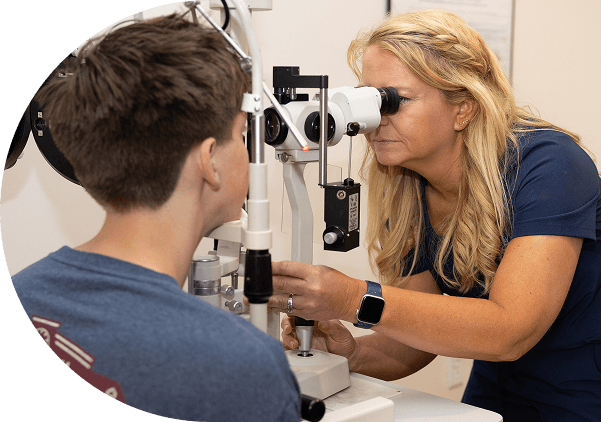
We monitor your child’s vision through their annual eye exams. This includes assessing their visual acuity (how well they can see at a distance) to check for signs of nearsightedness. We also perform a refraction to measure an approximation of your child’s refractive error (this is used to determine their eyeglass prescription).
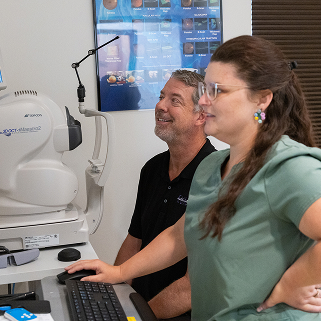
We also measure the length of the eye, called the axial length, in all children under 17. As myopia causes the eye to elongate more than in a normal eye, this measurement can provide Drs. Brown and Hayes with crucial information about your child’s risk of developing myopia.
All our tests are performed noninvasively, meaning nothing touches your child’s eye. If we detect myopia, we’ll discuss our myopia management options with you and your child.
Stellest spectacle lenses by Essilor are an FDA-approved treatment for myopia. Stellest lenses use over 1,000 invisible lenslets inside each eyeglass lens to send signals to the eye that slow myopia progression. The lenses can be shaped to the frames of your child’s choice and are customized for your child’s prescription.
Stellest lenses have been shown to slow myopia progression by 71% on average, compared to traditional glasses.
MiSight 1 day are soft, daily disposable contacts that use different treatment rings around the lens to both correct your child’s eyesight for clear vision and signal to the eye to stop elongation and slow myopia progression.
MiSight lenses slow myopia progression by 59% on average, compared to standard, single vision lenses.
Besides MiSight, we also offer other multifocal soft contact lenses to help manage myopia progression. Multifocal contact lenses have concentric rings with different prescription powers, helping to correct nearsightedness while slowing myopia progression at the same time.
We also fit toric style multifocals for kids and teens with astigmatism as well. Toric lenses are specially weighted to keep them oriented in a single direction for more stable vision.
Orthokeratology, or ortho-k, is a special type of contact lenses that are worn overnight to gently reshape the cornea. These specially designed molds change the curvature of the eye so light is refracted directly onto the retina for clear vision. The changes to the eyes’ shape are reversible, and the eyes will return to normal if the molds are not worn.
Ortho-k can provide many benefits, especially for active kids, as your child will not need to wear any glasses or contact lenses throughout the day. All their treatment time will occur overnight, allowing you to assist in the evenings and mornings with insertion and removal if necessary.
Ortho-k lenses have been shown to slow myopia progression by about 50%, compared to standard, single vision glasses or contact lenses.
Low-dose atropine eye drops can be used to help slow myopia progression. They are administered once a day, before bed, which reduces the impact on your child’s vision. Atropine eye drops are a great option for young children, and can be combined with special glasses or contact lenses when needed.
Dr. Hayes Explains Our Treatment Methods
Listen to Dr. Hayes discuss the myopia management treatment strategies that we use at Wildwood Vision Specialists. Note that Stellest myopia spectacles have now been FDA-approved!
Book Your Child’s Eye Exam Today
Pediatric eye exams scheduled each year are the first line of defense against myopia progression. Our routine screenings help to determine your child’s risk of developing myopia, so we can start myopia management as soon as myopia is detected.
Physical changes to the eye caused by myopia cannot be reversed. Myopia management helps to prevent and slow these changes before they occur. Therefore, it is most effective when started early.
If your child is nearsighted or you suspect that they have a vision problem, don’t hesitate to contact us. Book their appointment for a pediatric eye exam today. We’re happy to discuss the different myopia management options available for your child.
Visit Our Location
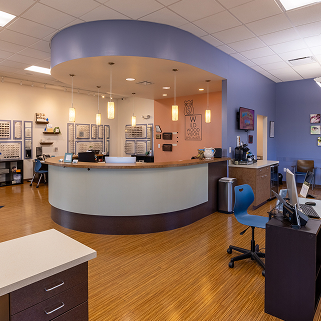
Find us just off Highway 100 on Fountain Place in the Wildwood Town Center. There’s plenty of parking right out front.
Our Hours
What Our Patients
Are Saying




I’ve been going to WWV since 2017, she jokingly said you’re an OG. They have all my eye records so the history told the story.
They operate consistently and efficiently which in large part is due to attentive staff. The story will continue.




Our Featured Eyewear Brands



Restore Comfortable Vision
Neurolenses can provide relief from headaches, motion sickness, and neck pain caused by eye misalignment.