Key Takeaways
- A comprehensive eye exam assesses more than how clearly you see.
- Pre-testing with diagnostic technology happens before you meet with the eye doctor.
- The exam checks your prescription, eye pressure, alignment, and physical eye health.
- Optical coherence tomography (OCT) imaging can detect changes early, sometimes before symptoms appear.
If you’re getting ready for your first eye exam, you’re probably wondering what to expect. Maybe you’ve seen pictures of the letter chart on the wall, but did you know an eye exam is more than a way to assess how clearly you see? Many families are surprised by how thorough the process actually is from the moment they walk through the door at Wildwood Vision Specialists.
A comprehensive eye exam is a full review of your eye health and vision, using diagnostic technology and a step-by-step clinical assessment to check for conditions that a basic vision screening can’t catch.
A Comprehensive Eye Exam vs. a Vision Screening
A school nurse or family doctor can sometimes spot a basic vision problem, like myopia, during a vision screening. It’s a useful baseline, but it’s not an eye exam. Those quick checks miss a lot of what goes on inside and around the eye.
A comprehensive eye exam looks at the full picture. Your eye doctor reviews how clearly you see, yes, but also how your eyes move, how healthy the structures inside your eyes are, and whether there are early signs of conditions you’d never notice on your own.
Eye exams are generally recommended every 1 to 2 years for healthy adults and annually for children, so our team can monitor your family’s visual health and catch changes as early as possible.
What to Expect Before You See the Eye Doctor
Check-In and Pre-Testing
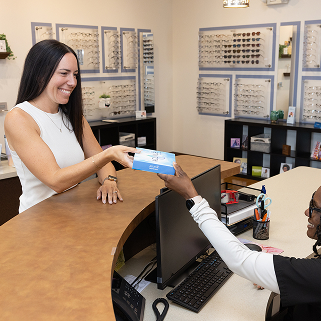
Before you step into the exam room, our team may ask you about your health history, any medications you take, and the vision concerns that brought you in. From there, the pre-testing process begins.
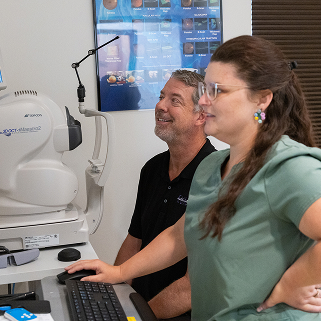
Diagnostic technology scans and images your eyes before your eye doctor ever picks up an instrument. That information gives your optometrist a detailed starting point and means your time in the exam room is focused and thorough.
How to Prepare for Your Visit
A little preparation goes a long way. Here are 2 simple things to bring or note before your appointment:
- Bring your current glasses or contacts so your eye doctor can compare your existing prescription.
- Write down any symptoms you’ve noticed, such as headaches, blurry vision, or eye discomfort, so nothing gets forgotten in the moment.
What the Eye Doctor Assesses During Your Exam
Your Prescription and Visual Acuity
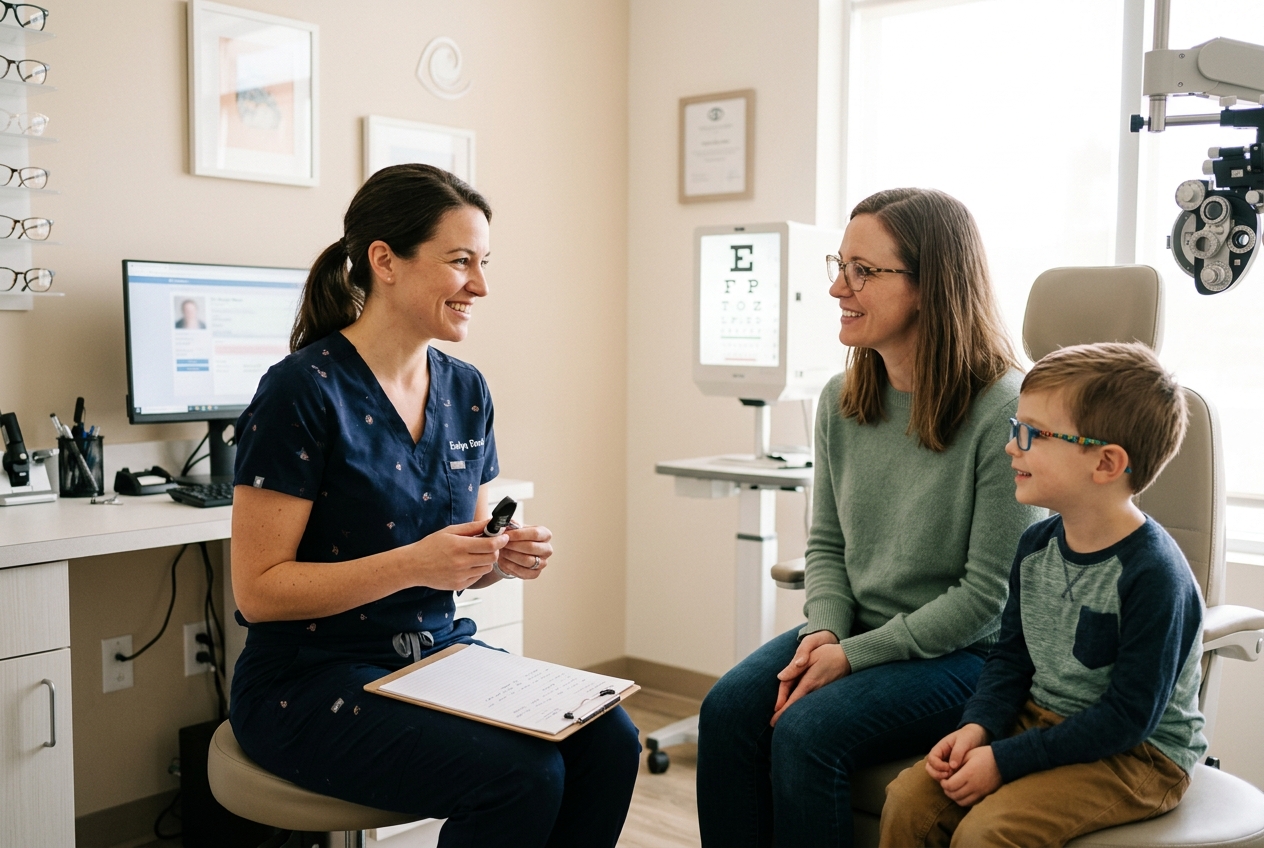
Your eye doctor can check how clearly each eye sees, both at a distance and up close. A refraction test then helps to determine your new prescription. You may be asked to tell your optometrist which side seems clearer to you while you look at letters across a room.
Eye Alignment, Teaming, and Depth Perception
Your eyes need to work together smoothly, which is why your eye doctor tests how well they coordinate as a team and checks their alignment during an exam.
This part of the exam matters, especially for school-age children. Poor eye teaming can affect reading, focus, and learning in ways that can sometimes look like attention issues rather than a vision problem. If you’ve noticed your child struggling in school, it’s worth reviewing the signs your child may need vision therapy before assuming it’s something else.
Eye Pressure and Physical Eye Health
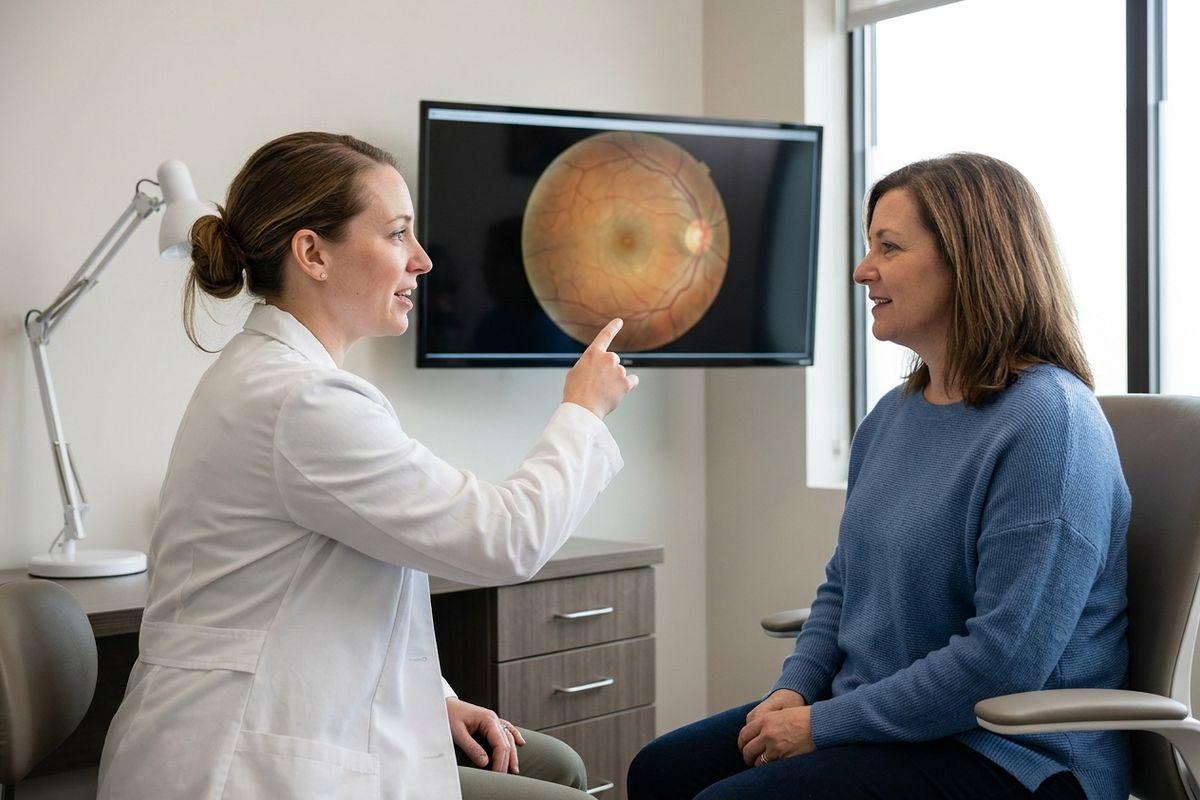
Eye pressure testing checks for early signs of glaucoma, a condition that rarely causes noticeable symptoms in its early stages. Tonometry, the test used to measure eye pressure, can detect elevated pressure that may point toward glaucoma sometimes long before you notice any change in your vision.
Your eye doctor can also examine the internal structures of your eyes and the surrounding tissue, from the lens (the clear, flexible lens inside your eye that helps you focus) to the retina (at the back of the eye), for any changes worth monitoring.
The Diagnostic Technology Used at Your Exam
Retinal Imaging and OCT Scans
Retinal imaging captures a wide view of the retina, giving your eye doctor a detailed look at the back of your eye. Alongside that, an optical coherence tomography (OCT) scan maps the layers of tissue in your eye with precision. Together, retinal imaging and OCT can detect disease-related changes sometimes before you feel or notice any symptoms, making them a meaningful part of the annual exam. OCT is also used in the ongoing management of ocular diseases.
Visual Field and Additional Testing
Visual field testing maps your peripheral (side) vision, an area that can be affected by certain conditions without you realizing it. The visual field test helps monitor conditions like glaucoma over time. Depending on what your eye doctor finds during your exam, they may add additional testing to get a clearer picture of your eye health.
What a Comprehensive Exam Can Detect
Common Conditions the Exam Can Detect
A thorough eye exam can detect a wide range of conditions, many of which develop without symptoms in early stages. Here are some of the most common ones that the eye doctor can check for:
- Issues with discomfort like dry eye or digital eye strain
- Vision problems like presbyopia, which affects near vision in many adults over 40
- Early signs of glaucoma, cataracts, and changes to the retina that benefit from early attention
Schedule Your Next Visit
If your child is due for their first exam, or if it’s been a while since any member of your family had an exam, our team at Wildwood Vision Specialists is ready to walk you through every step. Schedule your comprehensive eye exam today and get a clear look at where your eye health stands.